
How Often Should a Roof Be Replaced in Texas?
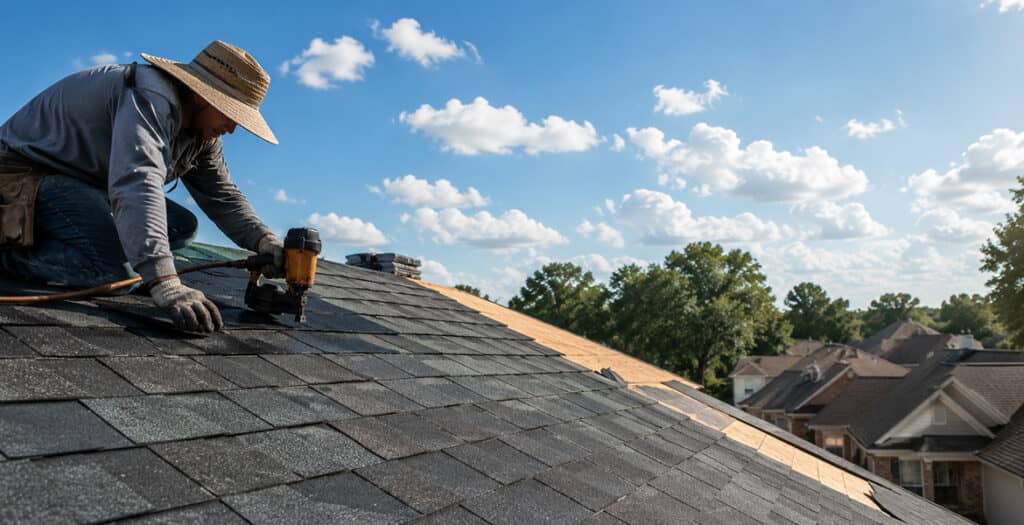
How Long Does a Roof Last in Texas?
Roofing Material | Nominal Design Life | Real-World Texas Lifespan | Primary Failure Mode in Texas |
3-Tab Asphalt Shingles | 15-20 Years | 10-15 Years | Wind uplift and thermal curling |
Architectural Shingles | 20-30 Years | 18-25 Years | Hail impact and granule loss |
Standing Seam Metal | 40-70 Years | 40-70 Years | Fastener issues and denting |
Clay/Concrete Tile | 50-100+ Years | 50-100 Years | Underlayment dry rot (20-30 yrs) |
Natural Slate | 75-200+ Years | 75-200 Years | Brittle fractures from large hail |

Your insurance policy may determine when you need to replace your roof more than the shingles’ actual condition does. Many Texas carriers have implemented a “15-Year Cliff” for roof coverage.
- Replacement Cost Value (RCV): The insurer pays for a brand-new roof of similar quality, minus your deductible.
- Actual Cash Value (ACV): The insurer only pays for the “used” value of your roof after they subtract years of depreciation.
Building codes also play a major role in replacement decisions. Most Texas jurisdictions follow the “25% Rule” from the International Residential Code.
1. If more than 25% of a single roof slope is damaged, the entire slope must be replaced.
2. Patchwork is often illegal once this threshold is crossed.
3. The new work must conform to the current building code, including upgrades to underlayment and ventilation.
- Granule Loss: If your gutters look like they are filled with black sand, your shingles are losing their UV protection.
- Curling and Cupping: Shingles that turn up at the edges have lost their flexibility and can no longer shed water properly.
- Ceiling Stains: Water spots on your interior ceiling usually indicate a long-term failure in the underlayment.
- Daylight in the Attic: Pinholes of light visible through the roof deck are a sign of serious structural gaps.
If you must replace your roof, you should consider upgrading to Class 4 shingles. These shingles are tested to survive hits from 2-inch steel balls dropped from 20 feet.
- Premium Discounts: Texas law requires insurers to offer discounts for impact-resistant roofing. You can save 20% to 35% on your annual insurance premiums.
- Longer Life: These materials often last 25 to 35+ years because they use rubberized asphalt that resists the Texas sun better than standard shingles.
- Higher Resale Value: A Class 4 roof is a major selling point for future buyers who worry about insurance costs.
Routine roof maintenance can add several years to your roof’s service life. You should treat your roof like a vehicle that needs regular maintenance.
- Clean Your Gutters: Clogged gutters trap water that can rot your roof’s wooden edges.
- Trim Tree Branches: Overhanging limbs scrape away protective granules and drop moisture-trapping debris.
- Check Ventilation: A cool attic prevents your shingles from “cooking” from the inside out.
- Fix Leaks Fast: A minor repair now prevents a major structural failure later.
A roof replacement in Texas is a complex financial decision. You should target a replacement between years 10 and 13 for standard architectural shingles to avoid the steepest depreciation curves. Waiting until after year 15 increases your risk of falling into the “Age Trap,” where you may have to pay for most of the new roof out of your own pocket.
Always hire an experienced contractor who understands local municipal codes. In coastal counties, you should also verify that your roofer obtains a Windstorm Certificate of Compliance (WPI-8). Without this document, your home may become uninsurable. If you are planning a roof replacement, professional roof installation services in Allen can help ensure the work is done properly and according to local requirements.